
Laser Hair Removal in Cheshire: What to Expect, and Why Wavelength Matters
Laser hair removal is one of the more straightforward decisions in aesthetics, yet the result depends heavily on the technology used and the skin it is used on. For anyone in Cheshire weighing it up, here is how the treatment works, what shapes the outcome, and what to reasonably expect from a course
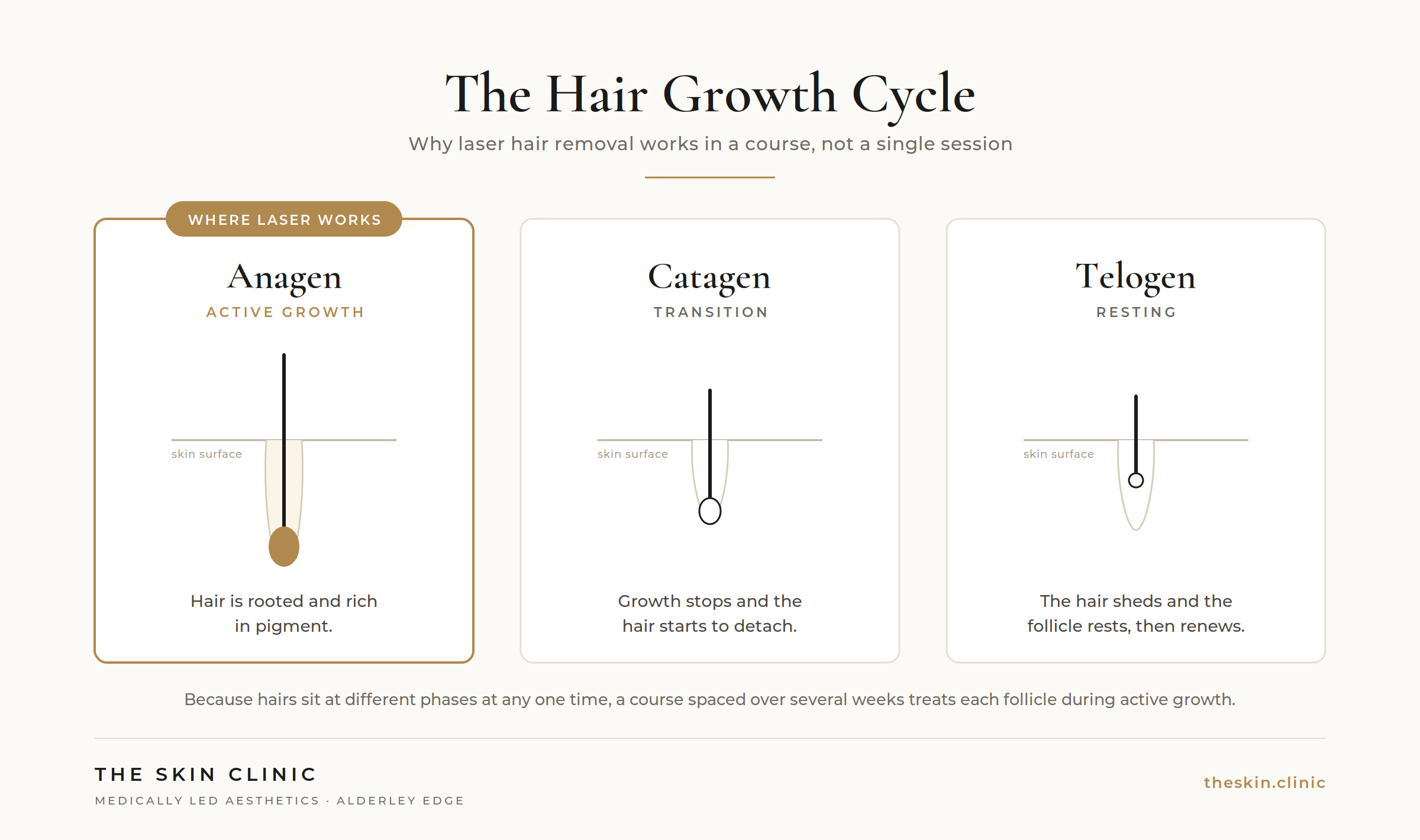
How laser hair removal works
Laser hair removal targets the pigment in the hair follicle. The device emits light at a specific wavelength, the pigment absorbs that light, and the resulting heat disrupts the follicle's ability to produce new hair. Because the laser only acts on follicles that are actively growing, and hair grows in cycles, a course of sessions is needed so that each follicle can be treated at the right stage of its cycle.
This is why a single session, however well delivered, cannot do the job on its own. The science is in the spacing as much as the settings.
Why wavelength matters
Not every laser is the same, and the difference is not marketing. Most systems use a single wavelength. The Visagé Quattro ICE uses four: 755nm, 808nm, 940nm and 1064nm.
Different wavelengths reach different depths and respond to different combinations of hair and skin. Shorter wavelengths suit lighter, finer hair. Longer wavelengths, such as 1064nm, travel deeper and are better tolerated by darker skin tones, where single-wavelength devices carry more risk. A four-wavelength system can therefore be tailored more precisely across a wider range of clients, rather than applying one fixed setting to everyone.
For context, a number of widely used systems offer three wavelengths. The Quattro ICE works across four. That is a factual difference in the technology, and it is one of the reasons a course can be matched more closely to your skin.
How many sessions will you need
Most clients need a course of six to eight sessions, spaced roughly four to six weeks apart, to achieve a meaningful reduction in hair growth. The exact number depends on hair colour, skin type, the area being treated and hormonal factors, which is why a plan is set after assessment rather than promised in advance.
It is worth being clear on one point that some clinics blur. Laser does not deliver permanent removal. What a well-delivered course achieves is a lasting reduction in hair growth, with hair growing back finer and sparser over time. Occasional maintenance sessions help sustain that result.
What the treatment feels like
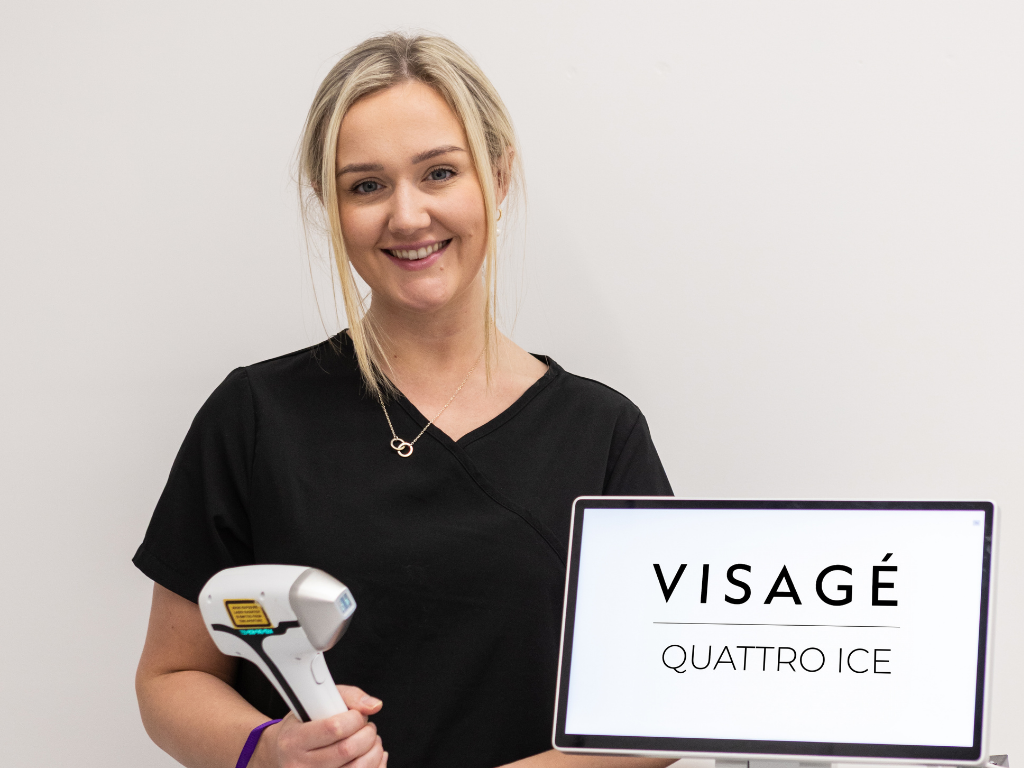
The Quattro ICE uses contact cooling to protect the skin and manage sensation throughout treatment. Most clients describe the feeling as a brief warmth, or a light flick against the skin, rather than anything they dread returning for. Sensation does vary by area and by individual, and your practitioner adjusts as the session goes on.
Who it suits
Laser hair removal is suitable for most areas of the face and body, and for a broad range of skin tones when the right wavelength is used. It is a considered choice for anyone tired of the ongoing cost and routine of shaving, waxing or epilation, and who wants a longer-term reduction rather than a temporary fix.
Where a course begins
Every laser client at The Skin Clinic starts with a consultation and patch test so we can understand what you are wanting to achieve along with a full assessment of your skin that informs the correct settings, identifies anything that needs to be accounted for, and shapes the plan around your skin rather than a generic protocol. It is the difference between a course built for you and a course applied to you
The Skin Clinic is a medically led clinic in Alderley Edge, with clinical oversight from a registered nurse and independent prescriber. If laser hair removal is something you have been considering, the sensible first step is the skin analysis, and the plan follows from there